
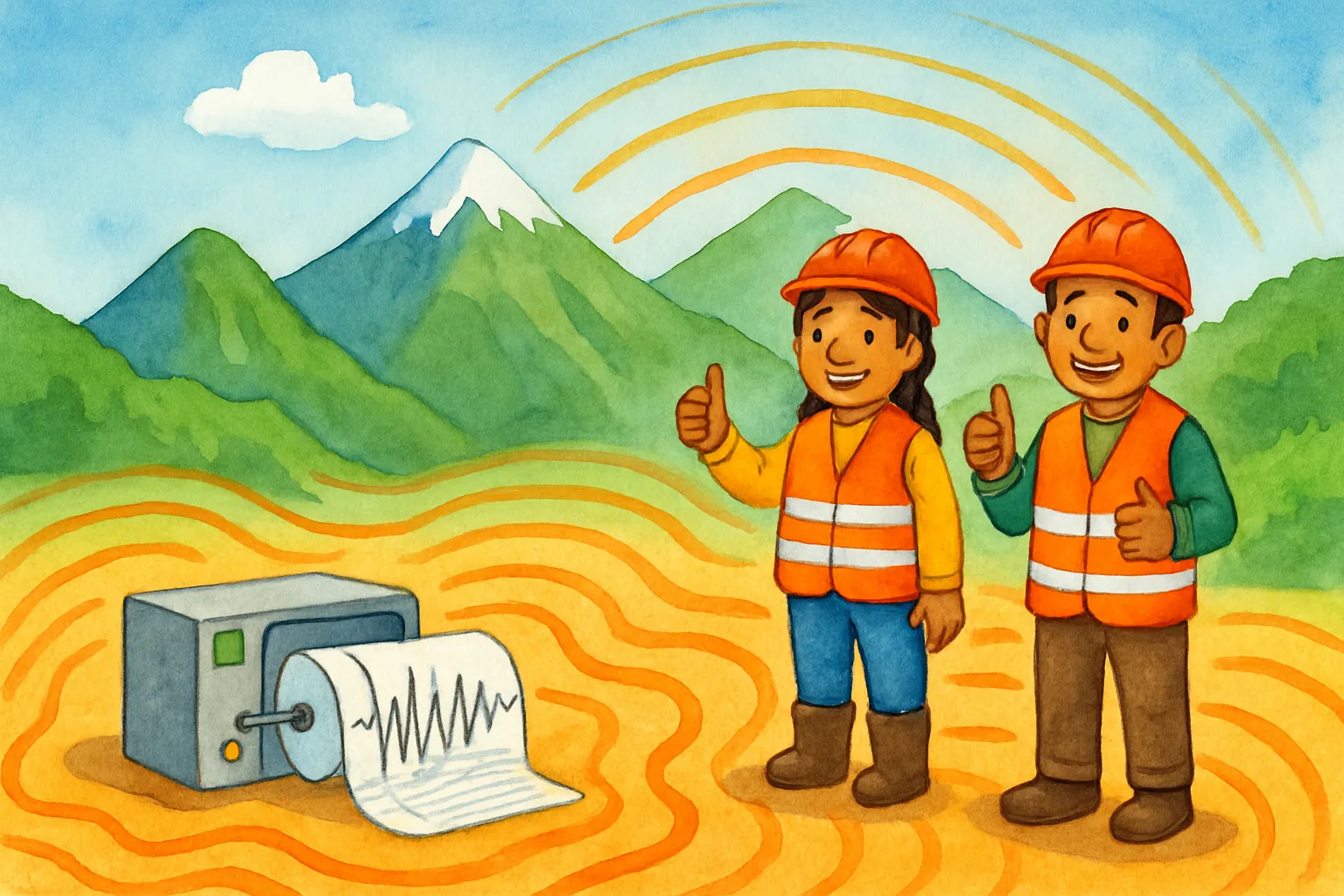
Earth on the Move! A Powerful Earthquake Shakes Peru’s Mountains
Quick Summary
A strong earthquake shook the mountains of southern Peru on Thursday afternoon. The U.S. Geological Survey measured it at magnitude 6.7. Despite how powerful it was, authorities reported no fatalities and no major structural damage.
What Happened?
At 1:00 p.m. local time on Thursday, the ground began to shake across several regions of southern Peru. The earthquake was centered about 24 miles northwest of a city called Upahuacho, deep in the Andes mountain range in the Ayacucho region.
The earthquake struck about 67 kilometers underground — roughly as deep as 200 Eiffel Towers stacked on top of each other. Earthquakes at that depth tend to spread their energy over a wider area instead of causing intense, focused damage near the surface. That is one reason why, even though this quake was powerful, the damage was limited.
The shaking was felt across multiple southern regions of Peru, including Ica and Arequipa. Peru’s National Emergency Operations Center reported that no one was killed. Some residents lost electricity, but no major buildings were reported to have collapsed.
Authorities urged people across the region to stay alert, since aftershocks — smaller earthquakes that follow a big one — are common.
Why Does It Matter?
Peru is located on what scientists call the “Ring of Fire,” a horseshoe-shaped zone that circles the Pacific Ocean. Along this ring, giant pieces of Earth’s crust — called tectonic plates — bump and grind against each other. That constant movement causes most of the world’s earthquakes and volcanic eruptions.
Peru experiences on average about 541 earthquakes of magnitude 4.0 or higher every year. That is more than one per day! For people who live there, being prepared for earthquakes is part of everyday life. Communities practice earthquake safety drills, and buildings in many parts of the country are designed to handle the shaking.
This latest earthquake is a good reminder of how restless our planet’s crust really is — and how emergency teams in earthquake-prone regions are always ready to respond and help.
Big Words
- Magnitude — a number that measures how strong an earthquake is; each full number up is about 32 times more energy released, so a 7.0 is much stronger than a 6.0
- Epicenter — the point on Earth’s surface directly above where an earthquake starts underground
- Tectonic plates — giant slabs of rock that make up Earth’s outer shell; they move very slowly and their edges can cause earthquakes when they bump or slide against each other
- Ring of Fire — a large zone around the Pacific Ocean where most of Earth’s earthquakes and volcanoes are found, because tectonic plates meet there
- Aftershock — a smaller earthquake that follows a larger one, often in the same area
Fun Fact
Peru experiences an earthquake of magnitude 4.0 or higher on average once every 16 hours — making it one of the most seismically active countries on Earth!
Think About It
Earth’s surface is made of giant puzzle pieces called tectonic plates. If you could watch them move in fast-forward, what do you think the surface of Earth might look like millions of years from now?
Sources
- ABC News / Associated Press — Magnitude 6.7 earthquake shakes Peru’s southern Andes, USGS says
- U.S. Embassy Lima — Natural Disaster Alert: Earthquake in Ayacucho Region
- Nation.com.pk — Powerful 6.7 earthquake shakes southern Peru as authorities urge vigilance across country