
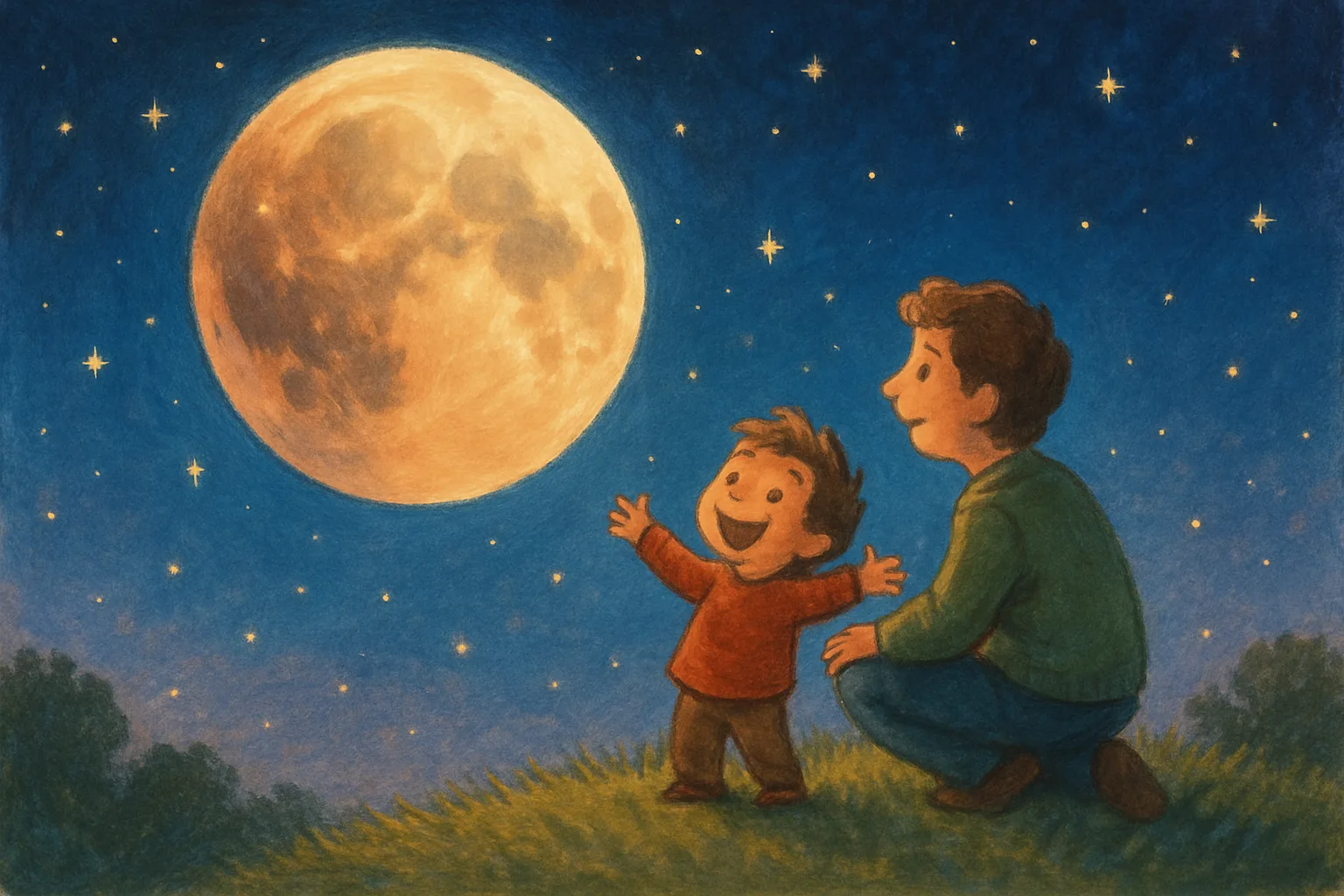
Moon Alert! A Giant Bite Is Coming — Watch This Week’s Dramatic Lunar Eclipse
Quick Summary
Get ready for one of the coolest sky events of the year! On the night of August 27 going into August 28, Earth will cast its shadow across the Moon. At peak, 96% of the Moon will be covered. That is almost a total eclipse! Billions of people across the Americas, Europe, and Africa will be able to watch it with just their eyes.
What Happened?
Twice a year or so, the Sun, Earth, and Moon line up in just the right way. Earth gets in the middle. When that happens, Earth’s shadow falls across the Moon, slowly darkening it. We call this a lunar eclipse.
The eclipse coming this week on August 27-28 is extra special. It is called a deep partial lunar eclipse. That means the Moon will not be completely covered — but it will be very close. At the most dramatic moment, 96.3% of the Moon’s disk will slip inside Earth’s darkest shadow, called the umbra. Only a tiny sliver of the Moon will remain fully lit.
From the Americas, the eclipse begins on the evening of Thursday, August 27. For people in the eastern United States, the partial phase starts at 10:34 p.m. Eastern Time and peaks around 12:12 a.m. The whole event lasts nearly six hours from start to finish.
Here is the coolest part: as the Moon slides deeper into Earth’s shadow, it turns a coppery, reddish-brown color. That happens because sunlight bends through Earth’s atmosphere and lands on the Moon — similar to how a sunset paints the sky orange and red. Imagine thousands of sunsets all around the Earth, all glowing at once onto the Moon!
About 3.3 billion people — roughly half the world’s population — will be able to see this eclipse. North America, South America, most of Europe, and western Africa all have front-row seats. No special glasses or telescope needed. Just look up!
Why Does It Matter?
Lunar eclipses are one of the few amazing astronomy events anyone can enjoy anywhere. You do not need a telescope, a dark mountaintop, or fancy equipment. All you need is a clear sky and a view of the Moon.
This eclipse is also notable because it is the deepest partial lunar eclipse until December 2028. After this week, you will not see anything like it for more than two years. So this is a great opportunity to go outside and watch!
For students, lunar eclipses are a perfect chance to understand why Earth, the Moon, and the Sun move the way they do. Watching in real time makes the science feel real.
Big Words
- Lunar eclipse — when Earth moves between the Sun and the Moon, so Earth’s shadow falls on the Moon and darkens it
- Umbra — the darkest, innermost part of a shadow; inside the umbra, the Sun is completely blocked
- Penumbra — the lighter, outer part of a shadow; the Sun is only partly blocked, making things look dimly shaded
- Partial eclipse — when only part of an object is covered by a shadow; not fully covered, but still very dramatic to watch
- Atmosphere — the layer of gas surrounding a planet; Earth’s atmosphere bends sunlight and gives eclipsed moons their red-orange glow
Fun Fact
During the deepest moment of a lunar eclipse, if you could stand on the Moon and look back at Earth, you would see a glowing red ring — every single sunset and sunrise on Earth, all at once!
Think About It
Why do you think the Moon turns reddish-orange during a lunar eclipse, rather than going completely black? What clues in the article help explain it?
Sources
- NASA Scientific Visualization Studio — August 27-28, 2026 Deep Partial Lunar Eclipse
- EarthSky — Deep partial lunar eclipse on August 27-28, 2026
- StarWalk — August 2026 Lunar Eclipse Details: Times, Visibility Map & Viewing Guide
- Space.com — Partial lunar eclipse August 2026 — Where will it be visible from?
- BBC Sky at Night Magazine — Lunar eclipse, 28 August 2026