
A Giant “Heat Dome” Is Baking Half of America This Fourth of July
Quick Summary
A powerful “heat dome” is sitting over much of the central and eastern United States right now, bringing dangerously hot temperatures just in time for July 4th celebrations. The National Weather Service says more than 300 temperature records could be broken this weekend. Scientists say knowing what a heat dome is — and how to stay safe — is super important.
What Happened?
This July Fourth could be the hottest on record for millions of Americans, as a massive heat wave traps more than half of the United States under a heat dome through the holiday weekend.
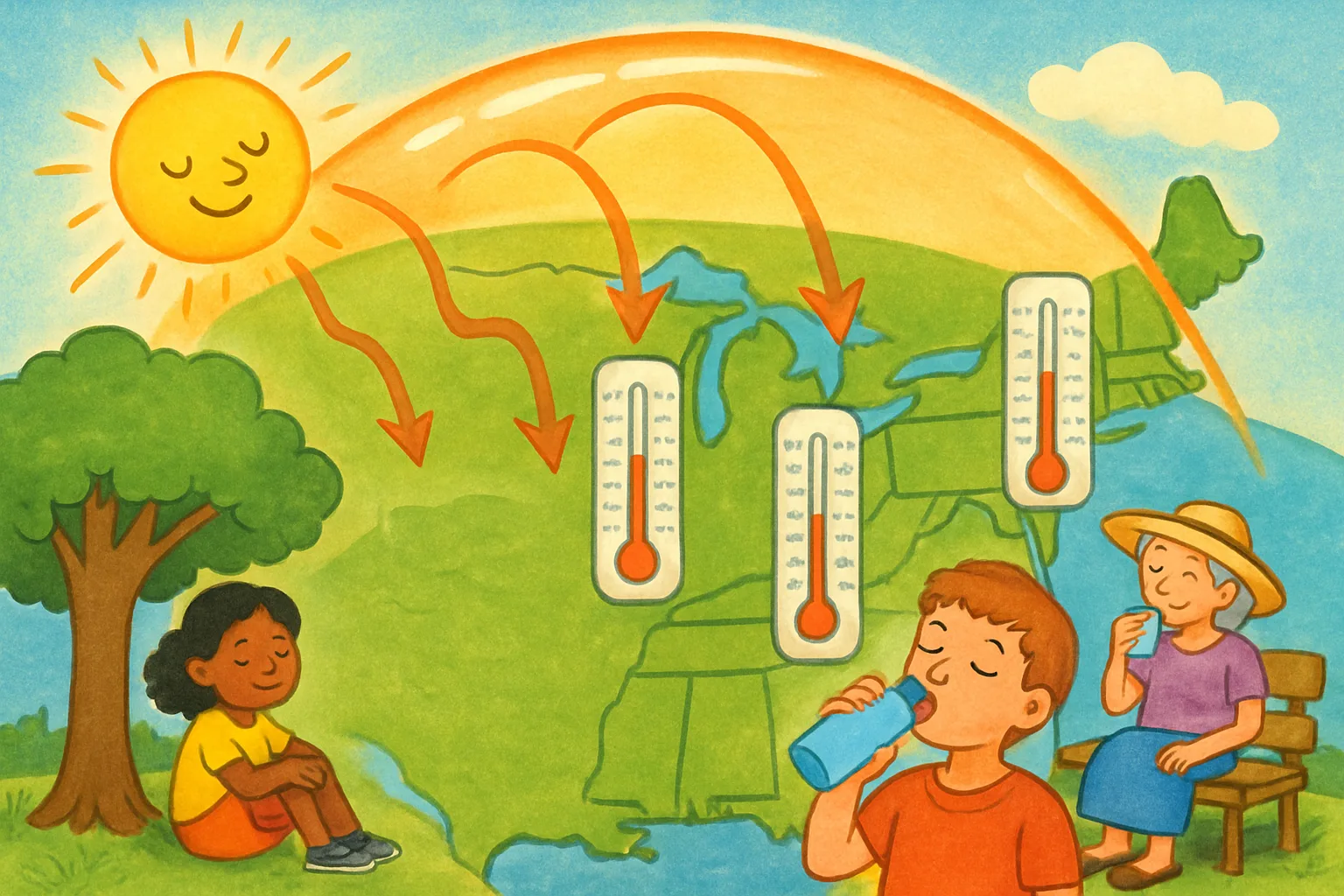
So what exactly is a heat dome? Imagine a giant pot lid made of high-pressure air. When a dome of high pressure settles over a region, it acts like a lid over a pot — trapping hot air near the ground and not letting it escape. The sun keeps heating the air underneath, and temperatures climb higher and higher.
A dangerous heat wave intensified across much of the central and eastern United States on Friday, July 3, 2026. Numerous daily temperature records have already been broken, and more are expected through the Fourth of July holiday weekend.
Between daily high temperatures and warm overnight lows — which won’t be low enough to offer much relief — more than 300 records are expected to be set by Saturday. More than 185 million people were under heat alerts Friday, including residents of multiple major metropolitan areas, like Boston, New York City, Philadelphia, and Washington, D.C., according to the National Weather Service.
Here’s what makes this heat wave especially tricky: triple-digit heat indices are expected for many, and daily low temperatures won’t drop below the mid-80s for some, offering little relief at night. When nights stay hot, people — especially the elderly — don’t get a break from the heat to recover.
This heat wave is happening at the same time as the FIFA World Cup and the United States’ Independence Day, meaning millions of people will be gathering outdoors. Local leaders are reminding everyone to stay hydrated and take breaks in cool, shaded or air-conditioned spaces.
Why Does It Matter?
Heat waves are a serious weather event. Extreme heat is the deadliest weather hazard in the United States. According to NWS data, the 10-year average stands at 273 fatalities per year — more than double the average for floods, the second-deadliest weather hazard.
The good news? Staying safe in a heat wave is very possible if you know what to do. Helpers including emergency services, cooling centers, and city officials are working hard to keep everyone safe. Scientists who study weather are also tracking this heat dome closely and sharing updates so communities can be prepared.
Climate scientists note that heat waves like this one are becoming more common and more intense over time, which is why understanding them is so important for everyone — including kids!
Big Words
- Heat dome — A zone of high-pressure air that traps hot air near the ground like a lid on a pot, causing temperatures to soar
- Heat wave — A period of unusually hot weather lasting several days or more
- Heat index — What the temperature feels like when you factor in humidity; hot, humid air feels much hotter than dry air
- National Weather Service (NWS) — The U.S. government agency that forecasts weather and issues safety alerts
- High pressure — A weather system where air sinks and spreads outward; it typically brings clear skies and, in summer, very hot conditions
Fun Fact
The hottest temperature ever officially recorded on Earth was 56.7°C (134°F), measured at Furnace Creek in Death Valley, California, on July 10, 1913. Even today’s extreme heat dome temperatures are far below that record — but for most American cities, they are historically high!
Think About It
If you were in charge of helping a city get ready for an extreme heat wave, what are three things you would do to help keep the people who live there — especially those without air conditioning — safe and cool?
Sources
- CBS News — “This July 4th could be hottest ever in parts of U.S.” (July 3, 2026)
- NPR — “A ‘heat dome’ is driving dangerous heat across the U.S. into the July 4 weekend”
- The Watchers / National Weather Service — “Dangerous heat wave continues into July 4” (July 3, 2026)
- Fox Weather — “July 4 heat dome intensifies” (July 3, 2026)
- Wikipedia — 2026 North American heat wave article