
Meet the Devil Flower! A Spooky New Plant Lives Entirely Underground
Quick Summary
Scientists in Thailand found a brand-new plant species that looks like something from a Halloween story. It is mostly black, has tiny horn-like shapes on top, and lives almost its entire life hidden under fallen leaves on the forest floor. Researchers gave it a fittingly spooky name: the “devil flower.”
What Happened?
Botanists from Chulalongkorn University and Prince of Songkla University were exploring Thong Pha Phum National Park in western Thailand when they stumbled across something remarkable. Growing on the forest floor — at nearly 1,000 meters above sea level — was a plant unlike almost any they had seen before.
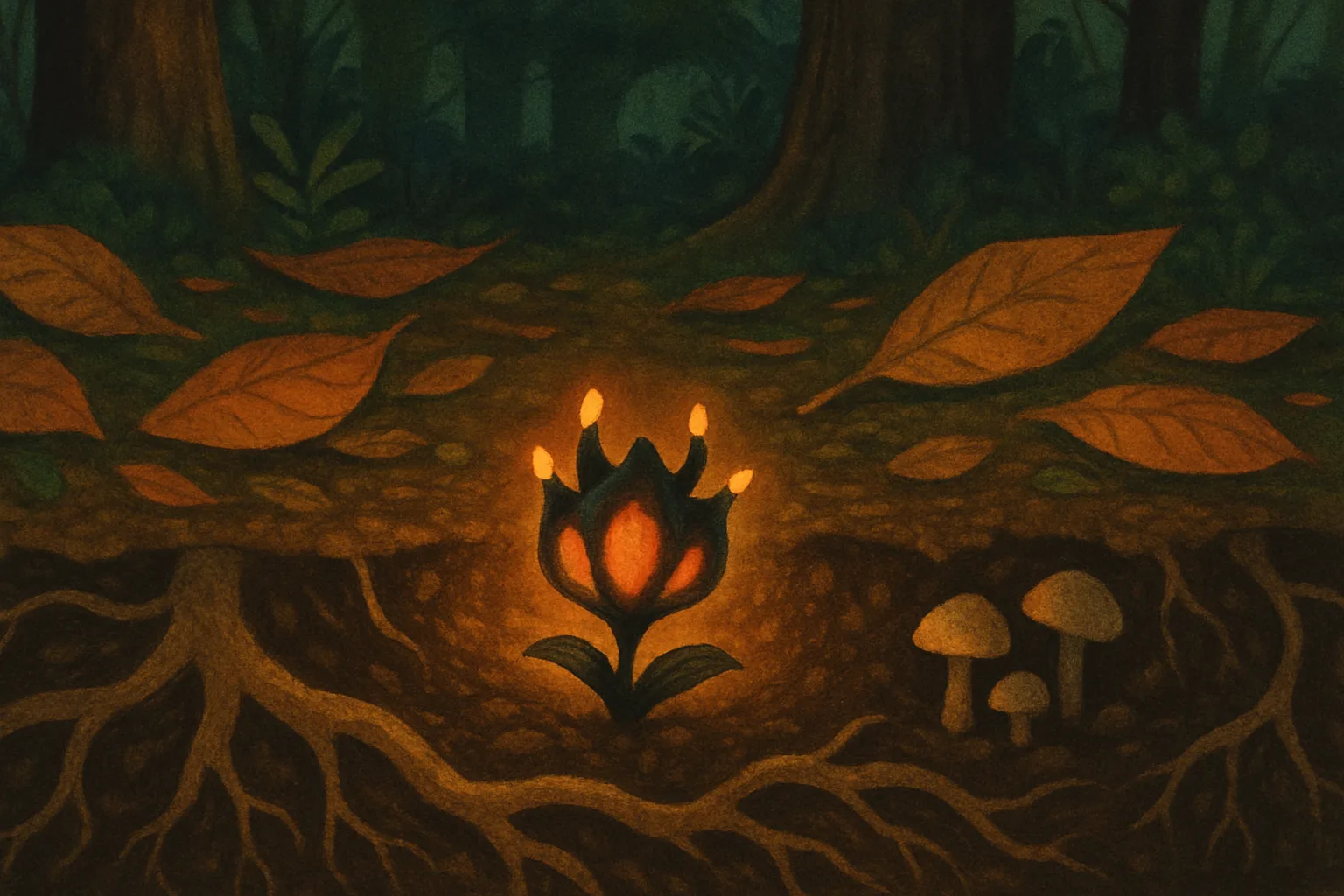
The plant is now officially named Thismia daemona. In Latin, “daemona” means demon or devil. The name fits. The flower is mostly black, with small horn-like points sticking up from a dome shape. Patches of vivid reddish-orange near its base look a bit like glowing eyes.
But the flower’s looks are not even the strangest thing about it. Most plants make their food using sunlight — a process called photosynthesis. The devil flower cannot do that. It has no green color at all, because it carries no chlorophyll. Instead, it sneaks nutrients from underground fungi through a hidden network of roots. Think of it like secretly borrowing someone else’s lunch without them knowing.
For almost its entire life, the plant hides completely under a thick layer of dead leaves on the forest floor. Only for a short time does it push a tiny flower up into the open world. Even then, it is so small and dark that it is easy to miss.
The discovery was especially surprising because this type of plant — known as a Thismia, or “fairy lantern” — had never been found this far north or this high up in a dry, seasonal forest. Scientists thought fairy lanterns only lived in low, permanently wet rainforests.
The study was published in the science journal PhytoKeys, and it brings the known number of Thismia species in Thailand to sixteen.
Why Does It Matter?
Only one small group of these devil flowers exists anywhere in the world. Fewer than 50 individual plants were found, all living in a patch of forest smaller than a soccer field. Scientists have already assessed Thismia daemona as critically endangered.
The plant lives inside a protected national park, which helps. But researchers say local communities must also be involved in looking after this tiny microhabitat. Tourism could accidentally damage the few plants that remain. Scientists believe that people who live nearby can be the plant’s best protectors if they learn to take pride in this remarkable, one-of-a-kind neighbor.
Big Words
- Botany — the scientific study of plants.
- Photosynthesis — the process plants use to turn sunlight into food; most plants need it to survive.
- Chlorophyll — the green substance inside plant cells that captures energy from sunlight; the devil flower has none.
- Fungi — living things like mushrooms and molds that grow in soil; the devil flower secretly steals nutrients from them.
- Critically endangered — when a species has so few individuals left that it could disappear from Earth very soon.
Fun Fact
Thismia plants are sometimes called “fairy lanterns” because their small, glowing flowers look like tiny magical lights peeking out from the dark forest floor!
Think About It
If a plant never sees sunlight, how do you think it knows when to send its flower up to the surface?
Sources
- ScienceDaily — Scientists discover a bizarre ‘devil flower’ hidden in Thailand
- EurekAlert! — New ‘devil flower’ species discovered in Thai national park
- Phys.org — New ‘devil flower’ species discovered in Thai national park
- Discover Magazine — A Newly Discovered ‘Devil Flower’ Hides Beneath the Forest Floor
- Pensoft Blog (PhytoKeys journal) — New ‘devil flower’ species discovered in Thai national park