
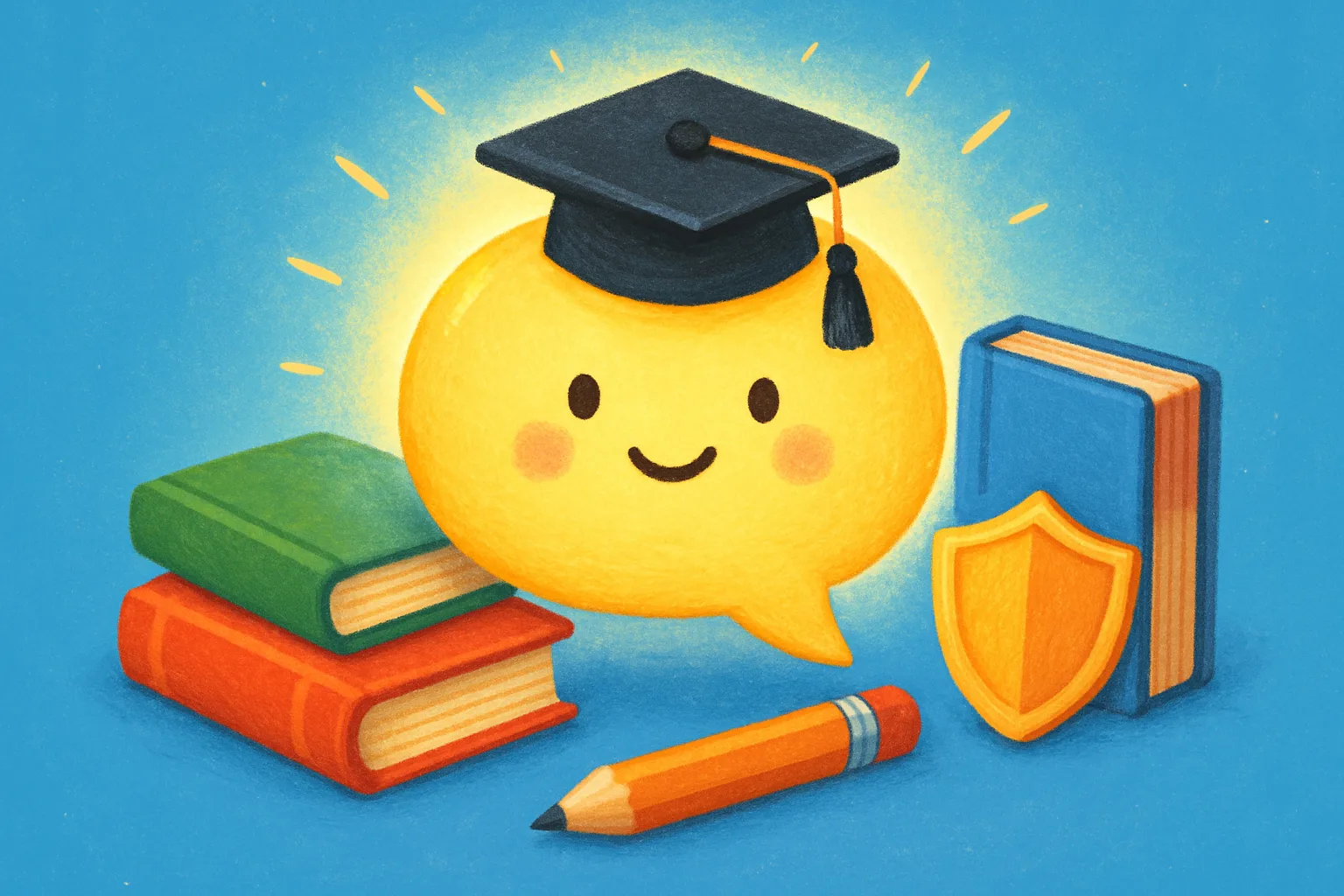
ChatGPT Gets a Special Teen Mode — Built for Learning and Safety
Quick Summary
OpenAI, the company that makes the AI chatbot ChatGPT, launched a brand-new version just for teenagers. It is called ChatGPT for Teens. It has stronger safety rules and special tools to help young people learn — instead of just giving them quick answers.
What Happened?
On Tuesday, August 18, OpenAI officially launched ChatGPT for Teens. It is designed for users ages 13 to 17. If you are in that age range and you use ChatGPT, the new system will automatically place you into the teen experience.
The teen version has several important differences from the regular adult version.
First, it blocks certain kinds of harmful content. It will not discuss topics related to self-harm, graphic violence, or romantic and sexual conversations.
Second, it is designed to help students actually learn — not just do their homework for them. There is a special Study Mode that walks students through problems step by step, like a patient tutor. It also sends reminders called Responsible Homework alerts if it notices a student is trying to take a shortcut instead of learning.
Third, the teen version reminds users to take breaks. If a teenager uses ChatGPT for 90 minutes within a three-hour window, the app sends a reminder to step away and do something else.
Fourth, the AI is instructed not to act like a friend or pretend to have feelings. OpenAI wants teens to remember they are talking to a computer program, not a person.
Parents can also link their accounts to their teenager’s account. This lets parents set rules, like blocking certain topics or setting hours when ChatGPT cannot be used.
Why Does It Matter?
Millions of teenagers already use AI tools for schoolwork, homework help, and even just to talk. OpenAI says it wants to make sure that experience is helpful, not harmful.
The new teen mode is a sign that technology companies are thinking more carefully about how their tools affect young people. AI is becoming part of everyday life, and learning to use it thoughtfully — asking it good questions, checking its answers, and not relying on it to do all your thinking — is an important new skill.
OpenAI says their goal is to treat teens like teens: not talking down to them, but also making sure they are kept safe.
Big Words
- AI (Artificial Intelligence) — computer software that can understand language, answer questions, and even have conversations, by learning from huge amounts of text
- Chatbot — a computer program you can have a written conversation with
- Content filter — a rule built into software that blocks certain topics or types of information from appearing
- Study Mode — a special ChatGPT feature that guides students through learning a topic step by step, rather than just handing over an answer
- Age prediction — a system that uses clues from how someone uses an app to estimate how old that person is
Fun Fact
More than 70% of American teenagers already use AI chatbots regularly, according to a 2025 study — making teens one of the biggest groups of AI users in the world!
Think About It
If you could add one more helpful feature to a teen-friendly AI tool, what would it be and why?
Sources
- OpenAI official blog — Introducing ChatGPT for Teens: Built for learning, backed by protections (Aug 18, 2026)
- ABC News — OpenAI launches ChatGPT for Teens, promising a more age-appropriate chatbot (Aug 18, 2026)
- NBC News — New ChatGPT teen-safety measures include age prediction and verification (2026)
- CBS News — OpenAI says it is rolling out new safety measures for ChatGPT users under 18 (2026)
- Axios — OpenAI debuts ChatGPT for Teens (Aug 18, 2026)