
Wild Surprise! Scientists Find Dozens of Brand-New Species in One of Africa’s Last Hidden Places
Quick Summary
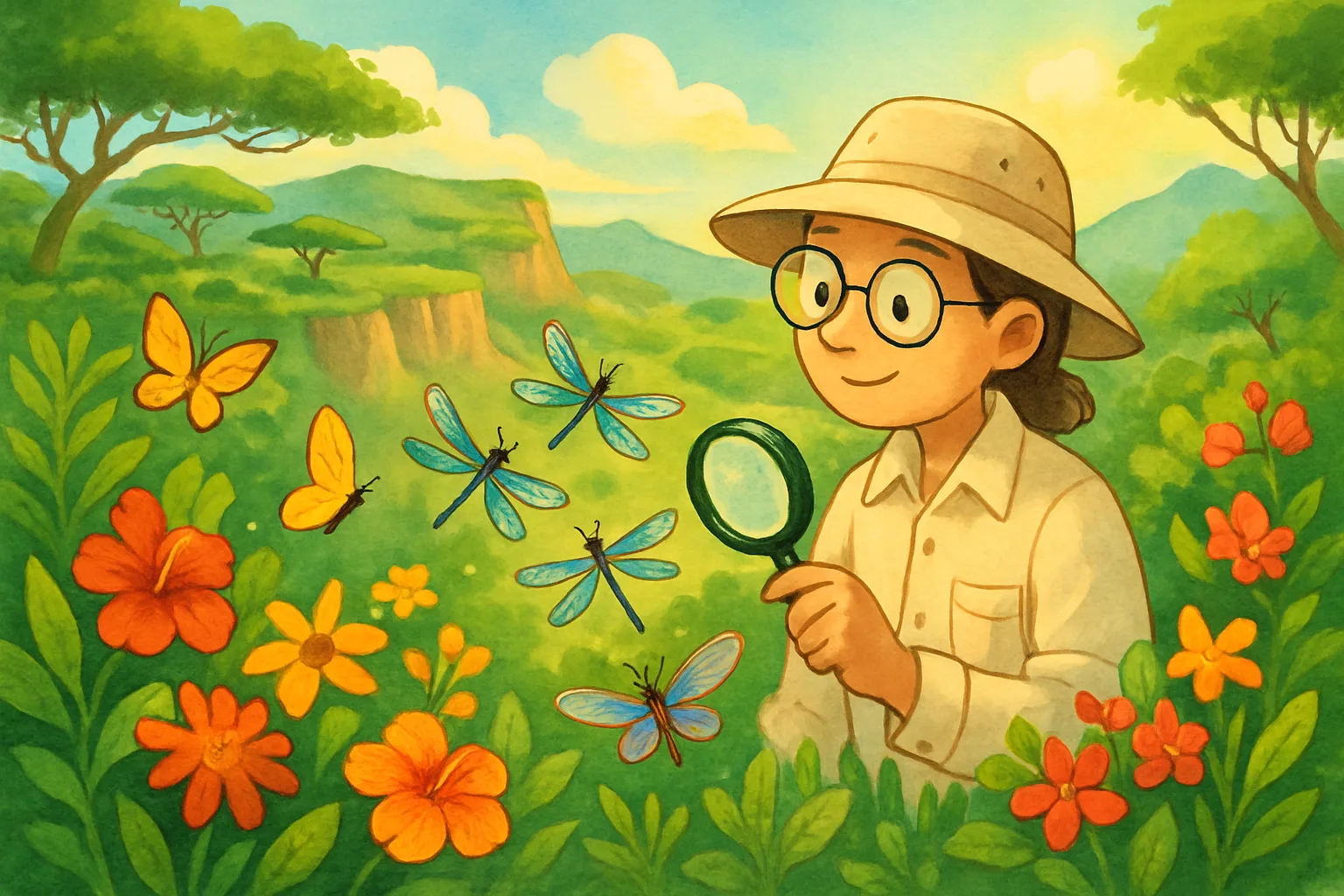
In a remote, hard-to-reach part of Angola in southern Africa, scientists have discovered dozens of creatures that science had never recorded before. The finds include eight new types of dragonfly, three new grasshoppers, and around 60 new moths and butterflies. It is one of the most exciting nature discoveries of the year!
What Happened?
High in the mountains of Angola sits a plateau called the Lisima Plateau. A plateau is a raised, flat area of land — imagine a giant table sticking up from the surrounding hills. For most of history, very few scientists had ever explored this place. It is remote, difficult to travel to, and largely uncharted.
A team of researchers decided to change that. They launched a scientific survey called the Cassai Life Atlas. Their goal was to carefully explore the plateau and record every living thing they could find.
What they found amazed them.
Hidden in this one small patch of Africa were creatures that no scientist had ever officially named or described. The team found eight brand-new species of dragonfly — each one different from any dragonfly known to science. They discovered three new types of grasshopper. And they recorded around 60 new species of moths and butterflies. Sixty!
That is a bit like opening a box of crayons and finding 60 colors that have no names yet.
All of these discoveries were published in August 2026.
Why Does It Matter?
Scientists estimate that millions of species on Earth have not yet been discovered and named. Most people picture jungles or deep oceans as the places where new creatures hide. But this discovery shows that even in areas that seem ordinary, extraordinary life can be waiting.
Each new species matters. Understanding what lives in a place helps scientists protect it. If a species goes extinct before we even know it exists, we lose it forever — including any medicines, clues about evolution, or other benefits it might have given us.
The Lisima Plateau’s discovery also reminds us that our planet is still full of surprises. There is still so much left to explore right here on Earth!
Big Words
- Species — a group of living things that are alike enough to mate and have young together; each species has its own unique features
- Plateau — a wide, raised area of flat land, like a huge elevated table rising above lower land around it
- Survey — a careful, organized search through an area to record everything found there
- Biodiversity — the amazing variety of different living things in a place; more biodiversity means more types of animals, plants, and other organisms
- Uncharted — not yet explored or mapped by scientists; unknown territory waiting to be discovered
Fun Fact
Dragonflies are ancient insects. They were flying on Earth more than 300 million years ago — long before dinosaurs! Some ancient dragonflies had wingspans as wide as a seagull.
Think About It
If dozens of new species were found in just one remote plateau in Angola, how many unknown creatures do you think might still be hiding in other unexplored places around the world?
Sources
- BBC Science Focus Magazine — Dozens of extraordinary new species have just been discovered in an uncharted corner of Africa (August 8, 2026)
- Sci.News — New Baobab Species Identified in Madagascar (Aug 17, 2026) [corroborating context on pace of new species discovery in Africa]